Make more of your stock.
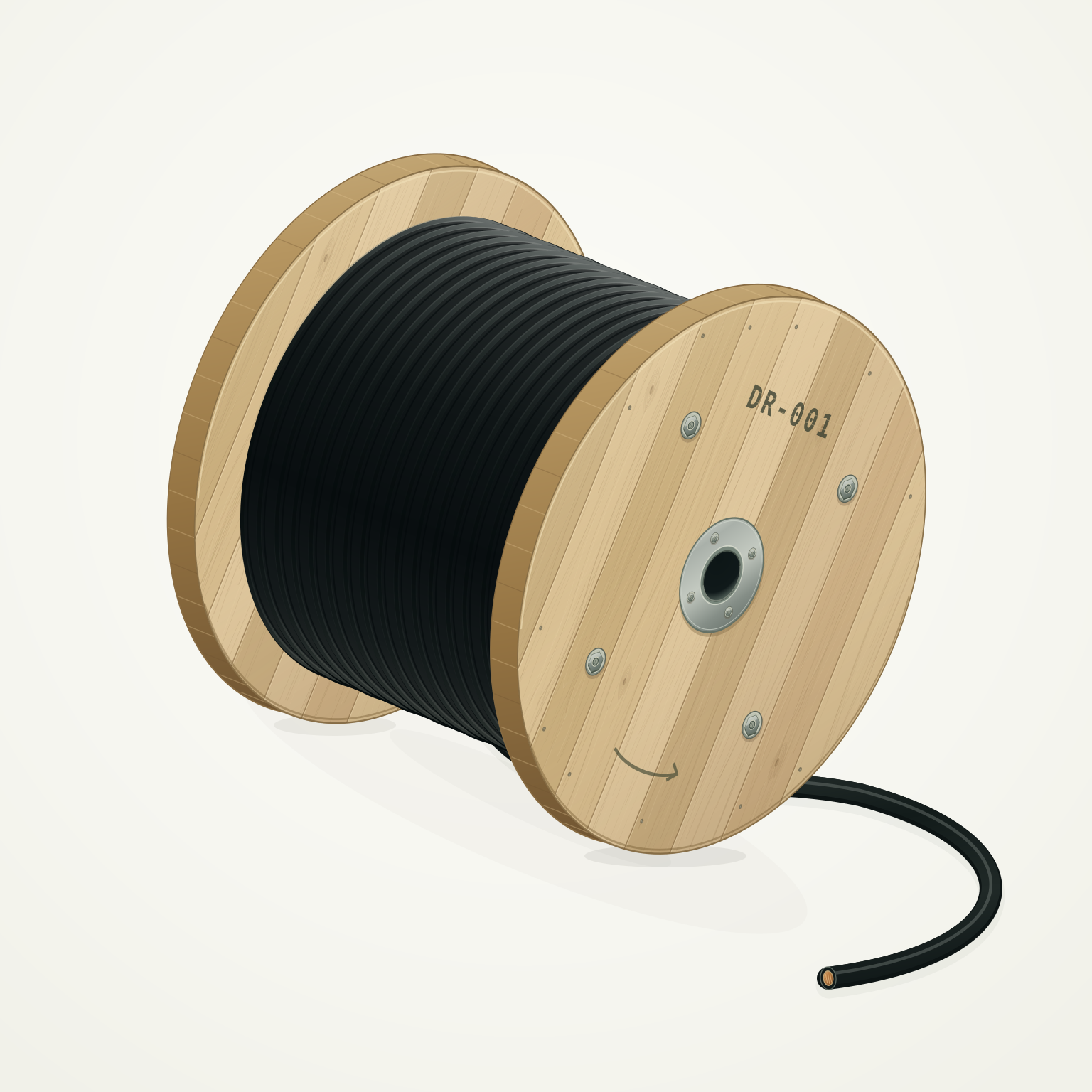
See how required lengths fit available drums, and where an unopened drum can stay intact.
ELECTRICAL ENGINEERING. CONNECTED.
Cable allocation, drum stock and field execution for electrical EPC project teams. Make better use of every metre, from the first plan to the final cut.
01 THE CABLE OPTIMIZER
A cable schedule tells you what you need.
Elecsense helps you decide how to use what you have.
Plan drum requirements before procurement, or allocate cables against available stock. Make the trade-offs visible, while there’s still time to act.
4C × 95 mm² · Cu / XLPE
A SMALL EXAMPLE. A CLEAR DIFFERENCE.
Start with the longest runs and check every opened drum for space before opening another.
The nine example cables total 2,960 m. Allocating the longest runs first, while checking every opened drum for space, opens four 1,000 m drums. Reassigning five runs fits the same schedule onto three drums, leaving 40 m on opened drums and one full 1,000 m drum unopened.
The second 250 m run cannot fit any existing remainder. See what changes when the whole schedule is planned together.
Remaining cable is stock, not automatically waste. This small example illustrates allocation logic; project results depend on cable specifications, drum lengths and your constraints.
See how required lengths fit available drums, and where an unopened drum can stay intact.
Retain run inputs, allocation results and downloadable Excel reports for a clear review record.
Bring cable plans closer to field reality through PullCards, recorded cuts and drum balances.
02 FROM OFFICE TO SITE
Engineering, cable management and field teams each see a different part of the project. Give them a connected record to work from.
Work from cable requirements and drum data. Run pre-order planning or post-order allocation, then inspect the results with the original inputs close at hand.
Revisions happen. Review proposed allocations with visibility into committed work and the drum capacity that remains available.
Review the proposed changes before releasing work to the field.
PullCards connect the cable, drum and planned work. Record actual cut lengths and laying progress, then follow the effect on recorded drum stock.
A physical cut and laying progress are separate events. Your records should reflect both.
4C × 95 mm² · Cu / XLPE
03 THE BIGGER PICTURE
Cable Optimizer is the beginning. Our vision brings project knowledge, design decisions and field reality into one engineering workspace.
Future platform · Planned expansion elecsense.
Connect project documents and engineering context.
Turn design rules into practical calculations and outputs.
Bring models, routes and field activity together.
Carry useful decisions and experience into the next project.
Let the next project benefit from what this one teaches you.
A second set of eyes on complex project documents. Surface conflicting requirements, scope ambiguity and execution risks, with references back to the source.
These future modules will be shaped and released in stages. Cable jointing and GPS-based drum location belong to the first customer release, separate from this expansion roadmap.
Transparent calculations. Connected decisions. Engineering knowledge that stays with the project.
04 THE ENGINEERING LIBRARY
Go beyond the overview. Explore the thinking behind better allocation, learn the workflow, or bring us a question.
Why an offcut isn’t always waste, how drum choices affect the plan, and what makes a result worth trusting.
Inputs, roles, calculation evidence and field records—an approachable guide to how the pieces fit together.
Download the nine-cable dataset and follow the allocation yourself. These CSVs illustrate the example; live project uploads use the application’s workbook template.
We’re gathering interest from engineers who want to share field challenges, test ideas and help shape the wider suite.
Register community interest05 PRICING & ACCESS
MVP access is by invitation. Start with a demonstration, then agree the project scope, onboarding and quotation with our team.
PROJECT PILOT
Let’s scope it. Project-based quotation
A focused conversation about your cable data, team and delivery workflow.
ORGANIZATION
Plan your rollout. Let’s discuss your requirements
Explore how the product could fit your organization and its project teams.
Explore the free allocation example without an account. Customer workspaces are provisioned by invitation. Already invited? Log in.
06 YOUR TEAM. YOUR PROJECT.
Know how your team will work before you commit to a pilot. We discuss data handling and project responsibilities with you during onboarding.
Accounts and project memberships are arranged with your team. Engineering and subcontractor users receive access appropriate to their assigned work.
Use the signed Excel workbook for cable schedules and drum stock. Review inputs and download calculation reports. Confirm any integration requirements with us before the pilot.
Review hosting, data handling, project-data retention and support arrangements with us before onboarding.
Electrical engineering and construction teams delivering EPC projects: engineers planning cable requirements, cable managers coordinating allocations, and field teams recording cuts and installation progress.
Yes. The product works from cable schedules and drum data. Pre-order planning helps explore drum requirements; post-order allocation works against available stock. A pilot discussion can confirm the input format and how your project rules map to the workflow.
No. A balance on a drum may still be useful. The aim is to improve allocations and retain useful stock. The example above keeps total cable stock constant and distinguishes remaining lengths on opened drums from full drums that stay unopened. Actual results depend on your constraints.
The first release centers on Cable Optimizer: pre-order and post-order runs, calculation reports, execution preparation, and field PullCards with cut recording. Cable jointing and GPS-based drum location are included in the first customer release. The wider engineering suite shown above is planned; a native mobile app is also future scope.
Field PullCards can be used in a mobile browser to record cuts, progress and notes. A dedicated native mobile application is part of the future direction. This landing-page example uses sample data and does not connect to a live project.
Request a presentation or walkthrough using the form. You do not need an account or a project upload. Our team reviews your enquiry and arranges the next step. Customer access is invitation-only during the MVP.
Request a demoAccess follows assigned organization and project memberships, with role-based permissions for engineering and field work. We confirm your team structure, data handling and support-access arrangements before onboarding. Please keep confidential project documents out of the public enquiry form.
We start with a walkthrough, review your input format and project rules, and agree the scope, participants, commercial terms and onboarding schedule. Timing depends on your data and requirements; there is no automatic subscription or instant project access.
YOUR NEXT PROJECT STARTS HERE
Bring your cable challenge. Let’s explore what a better plan could look like.
Request a personal demo Or email [email protected]